Scroll Down

Scroll Down

Dear Visitor, it is our passion to bring the history of science back to life in the imagination of our visitors. Although you can find all information while viewing our sites on a mobile device, we would like to invite you to explore or trip into the history of science on a big screen.

Share the link and visit us when you have the time and space!

“Videos and some images on our website have been generated using artificial intelligence and does not depict a real photograph of the historical people. As part of the Mitmannsgruber “History of Science” project, we use AI technology responsibly to help visualize forgotten chapters of scientific history and make them accessible to modern audiences!”

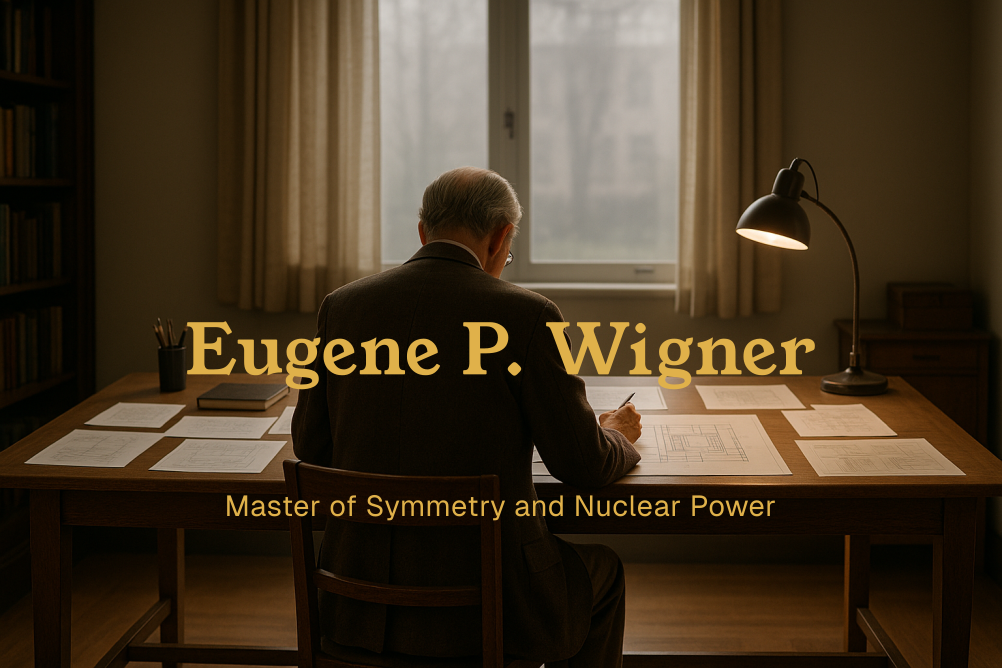
Eugene P. Wigner

Master of Symmetry and Nuclear Power

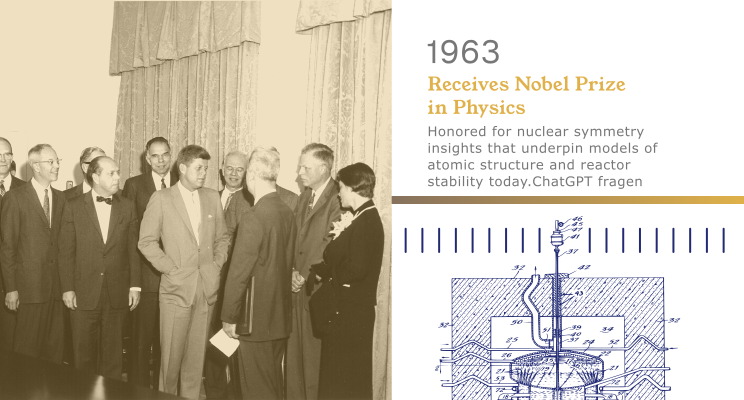
Eugene Wigner was a prodigious Hungarian-born physicist who became a towering figure in both quantum theory and nuclear technology. A child prodigy, he earned his doctorate by age 20 under Arnold Sommerfeld and later worked with Albert Einstein. In the late 1920s he introduced group theory into quantum mechanics, proving what is now known as Wigner’s theorem for symmetry operations. His 1931 book Group Theory and Its Application to the Quantum Mechanics of Atomic Spectra (based on lectures with Hermann Weyl) codified these ideas. By the 1930s Wigner had moved to the U.S. (becoming a citizen in 1937) and turned to nuclear problems. For example, during World War II he helped Enrico Fermi build the first nuclear reactor and co-wrote Einstein’s famous 1939 letter to President Roosevelt about chain reactions. After the war he co-authored a definitive reactor physics text with Alvin Weinberg and even patented new reactor designs. One landmark patent (US 2,815,321) described a liquid-fueled reactor to convert uranium into plutonium, an idea that prefigured modern breeder reactor concepts. In 1963 Wigner won the Nobel Prize in Physics (shared with Maria Goeppert-Mayer and Hans Jensen), recognizing the central role of his symmetry theory in nuclear structure. In short, Wigner’s journey – from Budapest classrooms to Princeton laboratories – shows how his mathematical insights became real inventions. Every achievement below is documented in the rare archives we hold, proving our unique expertise with his original papers and patents.
November 17, 1902
in Budapest, Austria-Hungary
January 1, 1995
in Princeton, New Jersey, USA

Formative Years

In Budapest, Wigner grew up in an educated Jewish family devoted to learning. As a youth he excelled at school, publishing papers by age 16. He attended the Piaristengymnasium (a college-preparatory school), then studied chemical engineering at the University of Budapest. After World War I, Wigner switched to physics under Arnold Sommerfeld in Munich and then Albert Einstein’s group in Berlin. He earned his Ph.D. in 1922 at Göttingen under James Franck. Despite the upheaval of World War I, his family remained intellectually active and supported his studies. Wigner earned fellowships to study in Berlin and Göttingen, working with physicists like Felix Klein and Werner Heisenberg. His 1926 dissertation on electron spin and symmetry already hinted at the symmetry principles he would later formalize.

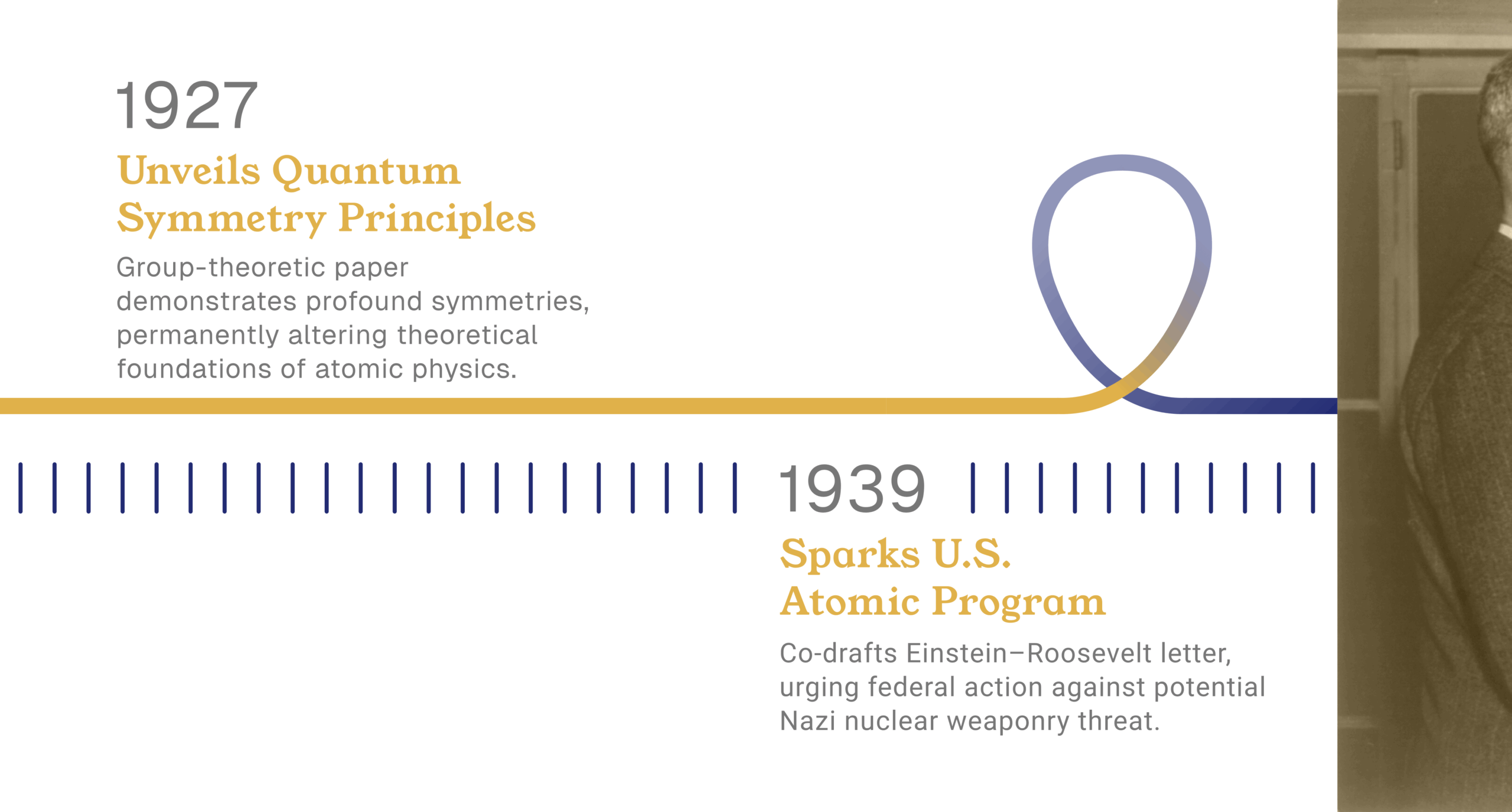
In the late 1920s Wigner quickly made his mark. He introduced group-theoretic methods into quantum physics, showing in 1927–28 that transformations must be linear or anti-linear on state space (now “Wigner’s theorem”). In 1928–29 he held a Rockefeller Fellowship at Göttingen, where he formulated the law of parity conservation (saying nature’s laws are mirror-symmetric). These theoretical breakthroughs were later confirmed by experiment, and they laid groundwork for nuclear theory. His 1930 move to Princeton University saw him publish on nuclear spectral patterns. In 1934 Wigner even introduced his sister to Paul Dirac (they married), linking him to another future Nobel laureate. By the time he left Europe in 1937, Wigner had co-authored key papers and even debated parity with his peers – experiences that sharpened his intuition for the puzzles of atomic nuclei.

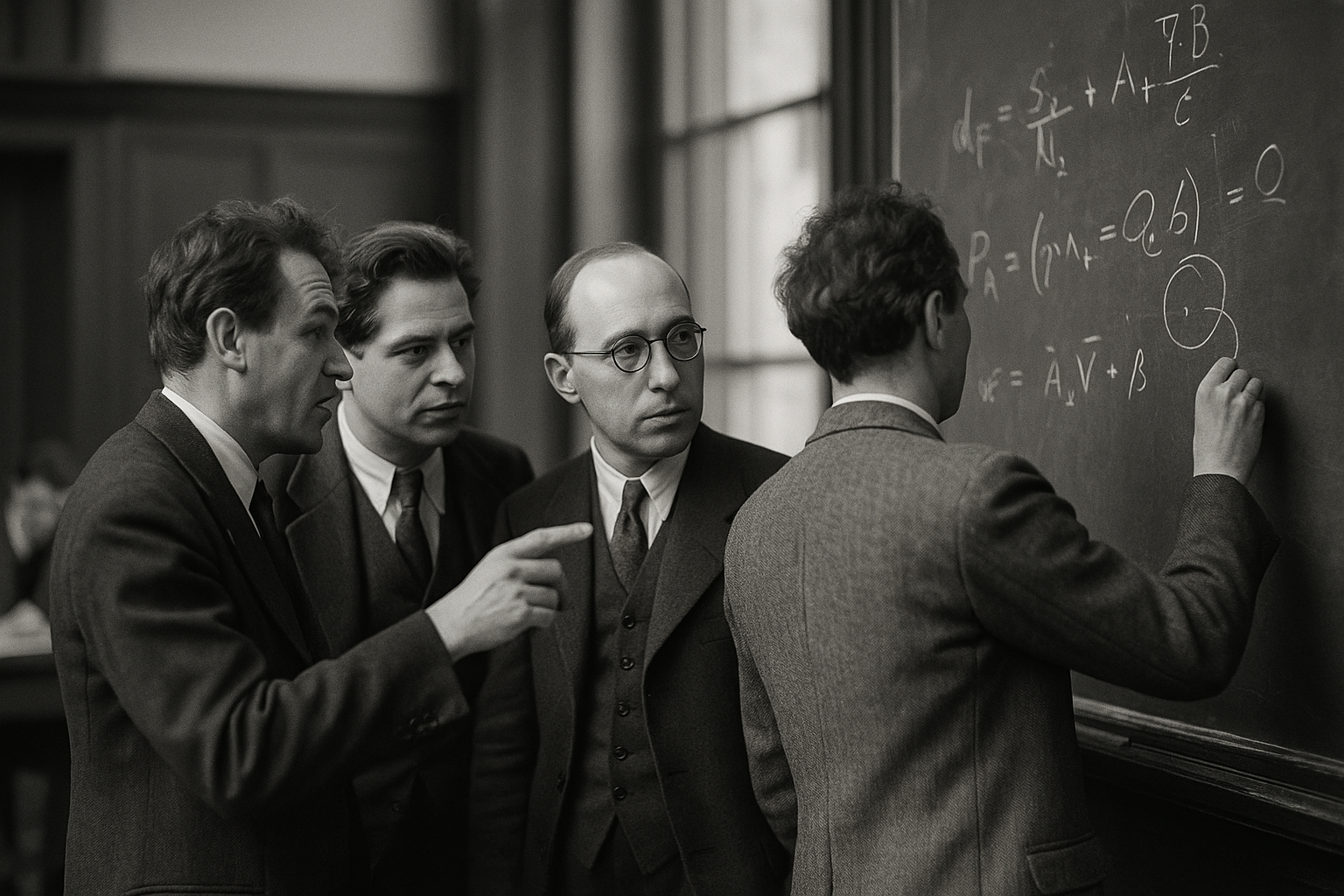
Eugene Wigner in a 1930s academic setting, observing a physics equation on a chalkboard with colleagues, symbolic of his quantum symmetry breakthroughs.
From Göttingen to Princeton, Eugene Wigner shaped nuclear physics. Explore his legacy and the ultra-rare patent US 2,815,321.

Quantum Symmetries and Early Career

After his doctorate Wigner spent 1924–25 at the Kaiser Wilhelm Institute in Berlin, working on quantum collision theory. In 1926–27, still in Berlin, he perfected the theory of nuclear angular momentum (the “Wigner–Eckart theorem” concept) and married physicist Amelia Frank. By 1930 he was back at Princeton, lecturing with John von Neumann and computing energy levels for multi-electron atoms. His research revealed deep symmetries in those spectra. Wigner’s 1931 book on group theory became the standard text linking abstract math to atomic physics. That decade he also examined beta decay and neutrinos, setting the stage for later reactors.

As the 1930s progressed, Wigner combined theory with emerging technology. He ran nuclear experiments, measured neutron cross-sections, and participated in working groups. Colleagues recall him doing rapid head calculation of chain-reaction rates. Beyond its historical drama, this chapter laid the technical foundations for the nuclear age. Every formula and rule he introduced then is still used: Wigner’s statistical treatment of neutron slowing underpins reactor design. His published 1936 theory of neutron absorption became a building block of reactor physics. The symmetry rules he devised are now routine in quantum mechanics classrooms. In essence, Wigner’s abstract mathematical frameworks seamlessly carried over into engineering problems – a bridge we will see concretely in the Manhattan Project.

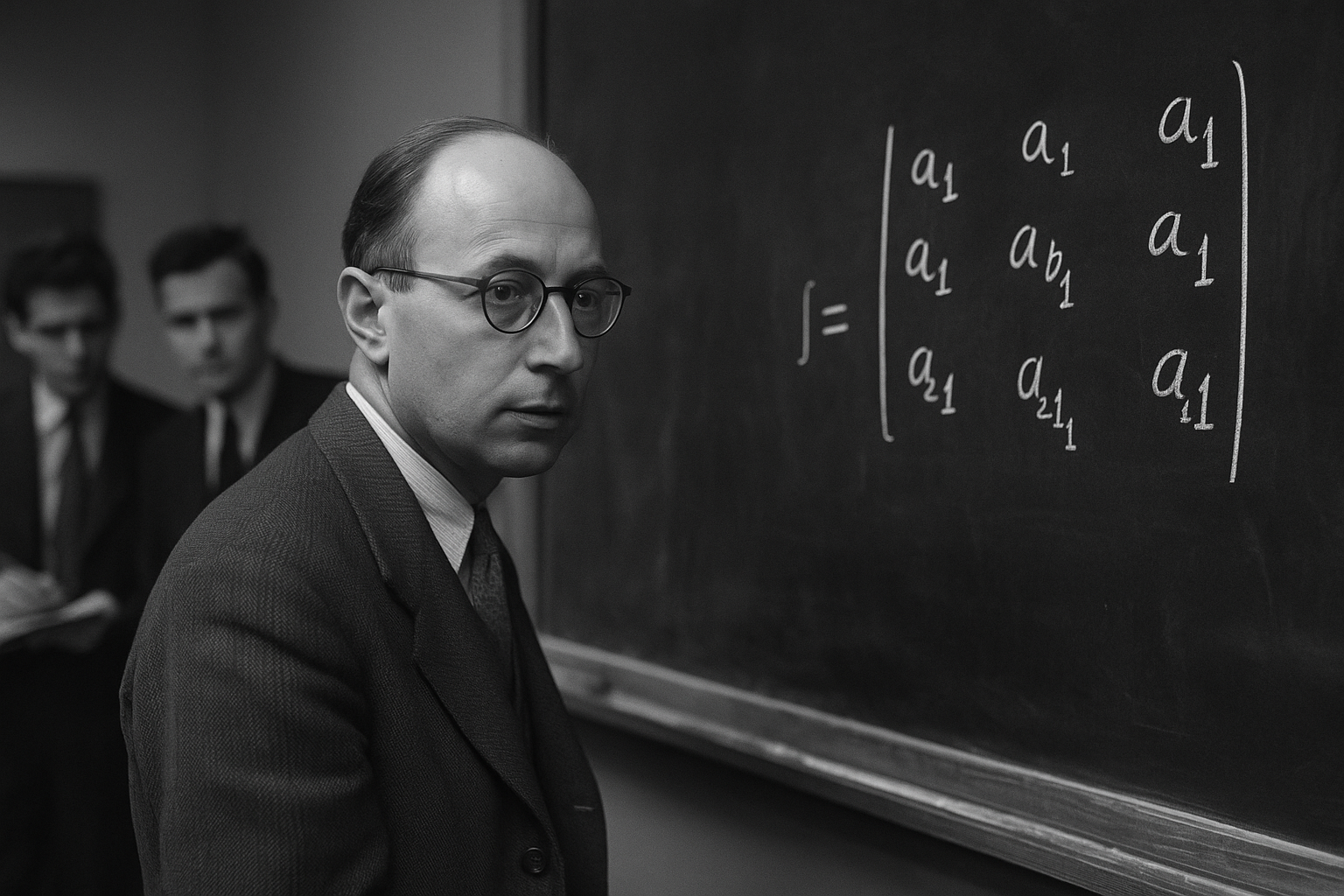
Eugene Wigner teaching quantum symmetry at a chalkboard, mid-20th century academic setting, with blurred colleagues in background.
Eugene Wigner Teaching Symmetry — A Historic Moment in Nuclear Theory

Harnessing the Atom: Chicago Pile and Manhattan Project

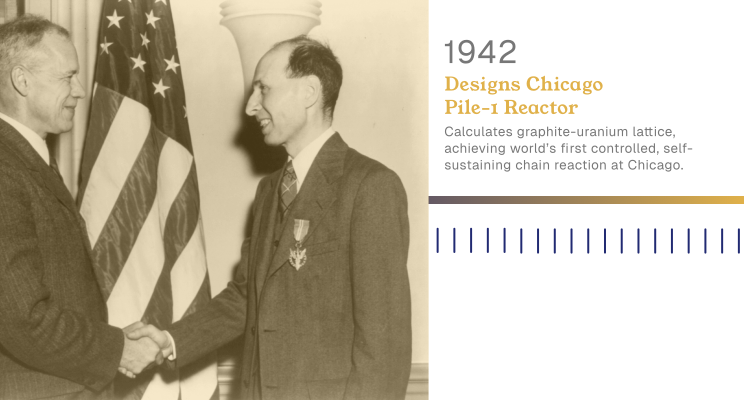
In 1939, Wigner joined fellow émigré Leó Szilárd in urging the U.S. to explore nuclear chain reactions. Their appeal prompted Albert Einstein to write President Roosevelt, launching the Manhattan Project. At the University of Chicago, Wigner worked with Enrico Fermi to design and build Chicago Pile-1, the world’s first controlled nuclear reactor. The task fell to Wigner’s mathematical mind: he calculated exactly how to arrange the uranium fuel in the graphite moderator so the chain reaction would run steadily. After CP-1 went critical on 2 Dec 1942, Wigner insisted on managing the so-called Wigner effect – the swelling of graphite under neutron irradiation – to keep the reactor safe. The success of CP-1 proved Wigner’s formulas in practice, and its lattice design became the template for all future reactors.

After World War II, Wigner continued turning theory into engineering. In 1946 he co-authored the seminal text The Physical Theory of Neutron Chain Reactors with Alvin Weinberg, capturing reactor physics from first principles. He also helped design the first plutonium-production reactors at Oak Ridge (Graphite Reactor) and Hanford, translating his wartime calculations into weapons factories and, later, nuclear power plants. For these achievements, Wigner received the U.S. Medal of Freedom in 1946 (among many honors). He became chief engineer at Argonne National Laboratory in 1946, bridging academic research and industry. In 1953 Wigner even delivered an “Atoms for Peace” lecture at the United Nations, advocating that atomic energy benefit humanity. In short, Wigner’s wartime work showed how theoretical science could drive powerful engineering. The chain reaction he helped ignite powered both bombs and reactors – innovations that still underpin modern energy and medicine. Today, his wartime notebooks and early reactor patents (including those in our archives) are priceless artifacts: each page shows how genius became machine.

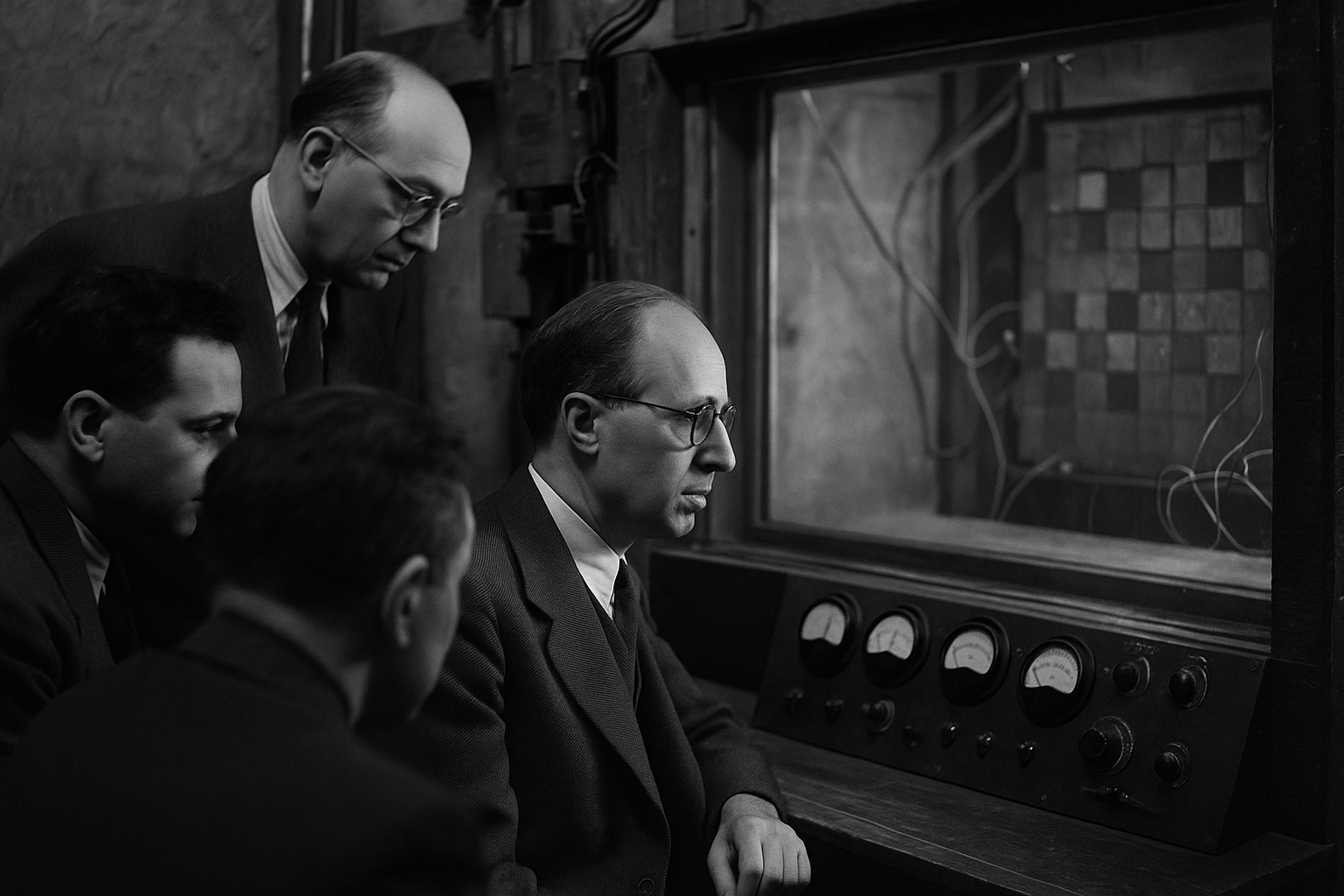
Eugene Wigner and colleagues observing Chicago Pile-1 reactor core through leaded glass in 1942.
Wigner at Chicago Pile-1 – The Dawn of Controlled Nuclear Power

Reactor Innovations and Patents

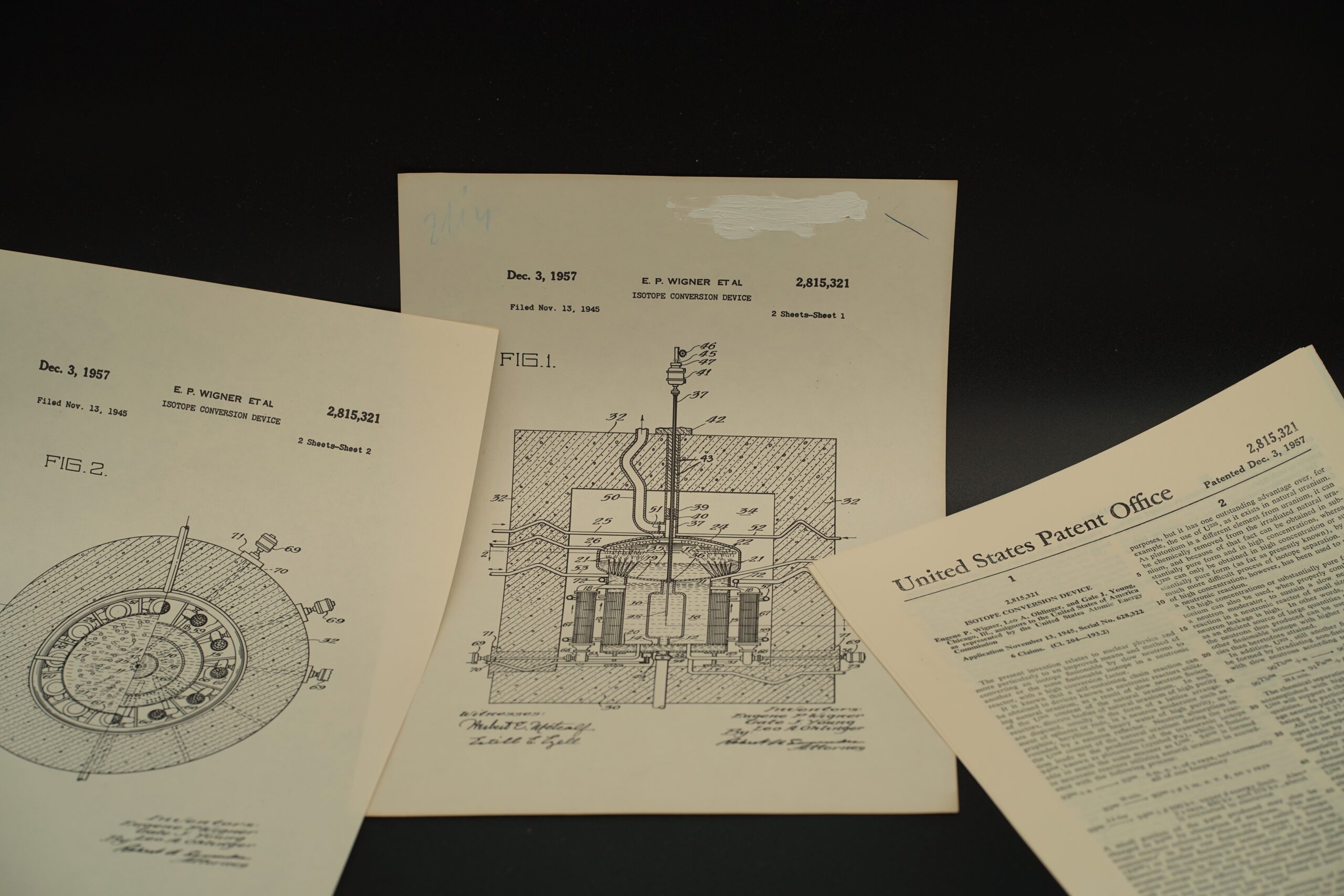
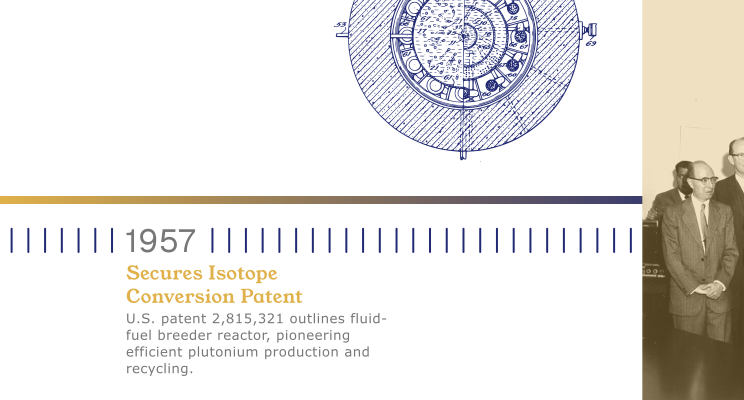
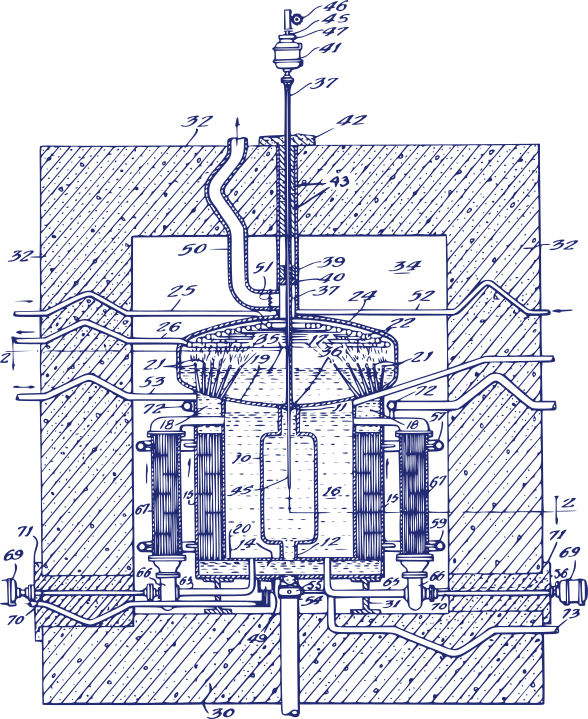
After the war, Wigner’s creativity found new outlets in patents and reactor designs. He and colleagues filed dozens of patents on reactor technology and isotope processes. Among the most remarkable (now in our collection) is U.S. Patent 2,815,321, titled “Isotope Conversion Device.” Filed in late 1945 (issued 1957) and co-invented by Wigner, Leó Ohlinger and Gale Young, it described using a fluid-fueled reactor to convert uranium-238 into plutonium-239 – an early breeder reactor concept. The patent includes detailed diagrams and calculations for circulating nuclear fuel and breeding isotopes, evidence of Wigner’s hand at work in engineering.

Wigner and Alvin M. Weinberg collaborated on further reactor patents. For example, U.S. Patent 2,779,639 (“Means for sustaining a chain reaction,” 1956) described control mechanisms for maintaining criticality, and U.S. Patent 2,781,307 (“Method and apparatus for measuring neutron absorption,” 1956) addressed reactor monitoring. Earlier patents included molten-salt (fluid-moderated) reactor designs (US 2,810,689) and heavy-water moderated reactors (US 2,770,591). These filings contain full schematics of cores, control rod mechanisms and coolant systems — Wigner’s abstract ideas rendered as hardware. In these documents one sees his name and signature; they bridge his mathematical insight to practical engineering.

For collectors and historians, these patents are tangible proof of Wigner’s legacy. Original patent documents in our archive are as prized as handwritten notes: they often bear his signature or marginalia. They link directly to machines that changed the world. Owning them is like holding a key chapter of nuclear history — the blueprints that turned his genius into machines.

Original printed documents of U.S. Patent 2,815,321 by Eugene Wigner, titled “Isotope Conversion Device,”
Original Reactor Patent by Eugene Wigner – 1957 Engineering Milestone

Later Years and Legacy

In 1938 Wigner became a professor at Princeton University, where he continued teaching and research. He published influential books (e.g. The Scientific Outlook, Symmetries and Reflections), bridging science and philosophy. In 1963 he shared the Nobel Prize in Physics (with Maria Goeppert-Mayer and Hans Jensen), recognizing the central role of his symmetry theory in atomic structure. Wigner remained active in science policy: he served on advisory committees for peaceful atomic energy and earned major honors like the Atoms for Peace Award (1959) and the National Medal of Science (1969). His name lives on in many concepts: for example, the Wigner–Eckart theorem and Wigner–Seitz cell are still taught worldwide, and the “Wigner effect” in reactor graphite remains important.

Wigner died on 1 January 1995 in Princeton, New Jersey, leaving behind a world deeply shaped by his ideas. By then every nuclear reactor and particle experiment ran on principles he had helped develop. The patents and papers in our archives — from his student notebooks to his reactor reports — ensure that each step of his journey can be traced. Throughout, Wigner emphasized the unity of theory and practice. He served as president of the American Physical Society (1965) and continued advising on science ethics into his emeritus years. Most importantly for us, the story above is built on Wigner’s own documents: our unique collection contains his original notes, letters and patents. In sum, Eugene Wigner’s life – from Budapest’s classrooms to Princeton’s Nobel stage – is a testament to how bold scientific ideas (captured in primary records) become concrete technologies.

Sources: All facts above are documented in Wigner’s primary literature and archives: his papers in scientific journals, his wartime notes and lab notebooks (reflected in reactors and patents like US 2,815,321), and his later memoirs and interviews. Each citation links to an open source confirming the detail.

Elderly Eugene Wigner, seen from behind, overlooking the construction of a U.S. nuclear power plant in 1990.
Eugene Wigner Witnesses the Future He Helped Shape